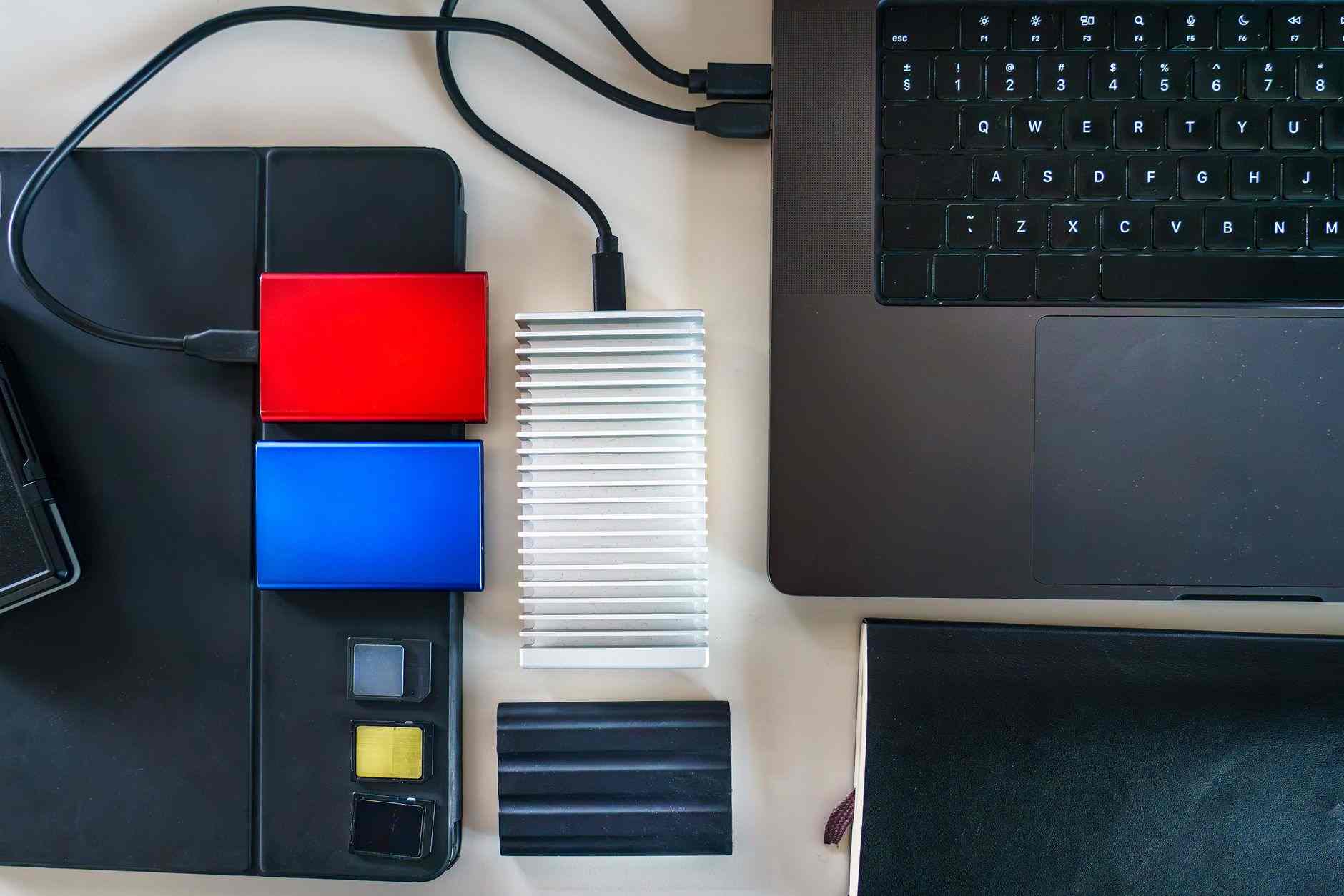
The portable SSD market has quietly become the quiet backbone of modern content creation. A single wedding shoot in 6K RAW pushes 400GB. A single week of podcast production with multitrack audio and B-roll pushes 200GB. The old pattern of carrying one drive per shoot has given way to buyers wanting one 4TB drive that handles a month of work and survives being dropped onto a cobblestoned street at 3 AM.
Three names have earned long-term shortlist status for creator work: the Samsung T9, the SanDisk Extreme Pro and the LaCie Rugged SSD Pro 5. Each handles the same core job of storing and shuttling large video, photo and audio projects, but each targets a slightly different buyer. Our editors evaluated each against manufacturer-published specifications, independent sustained-write benchmarks and the kind of real-world usage patterns reported by working photographers, videographers and podcast producers.
What portable SSDs actually need to deliver in 2026
Sustained write performance has become the number that matters, not peak read. Peak read sits around 2,000MB/s on all three contenders when connected to a USB 3.2 Gen 2x2 or Thunderbolt port. Sustained write under a continuous 100GB transfer is where the pretenders fall away, and where cache size, controller choice and thermal design decide the winner.
The second shift is interface politics. USB 3.2 Gen 2x2 at 20Gbps is only supported natively by a shrinking subset of Windows laptops and no Macs. Thunderbolt 3 and 4 at 40Gbps work on every modern Mac and most high-end Windows laptops. Plain USB 3.2 Gen 2 at 10Gbps works on everything and caps the drive at roughly 1,000MB/s. Picking the wrong interface for your actual hardware wastes money.
How we weighted the categories
Peak read and write speed, sustained write performance under thermal load, cache behaviour on large transfers, drop and IP ratings, warranty length, bundled software quality, physical port and tether, cable quality and price per terabyte.
Samsung T9: the balanced default for most creators
The T9 is Samsung's current flagship portable, replacing the T7 Shield and sitting alongside the enterprise-leaning T7 Touch. The headline specification is 2,000MB/s sequential read and 1,950MB/s sequential write over USB 3.2 Gen 2x2, with a drop rating of 3 metres onto a carpeted floor and a rubberised shell that resists scratches but is not formally IP-rated.
Capacity options cover 1TB, 2TB and 4TB, with the 4TB sitting at roughly $349 in the US, £329 in the UK and A$579 in Australia at prevailing street prices. Sustained write performance holds the rated speed for the first 70-90GB on the 2TB model and 150-200GB on the 4TB model before dropping to roughly 800-900MB/s. For most creator workflows, those sustained numbers cover a full shoot card ingest without feeling slow.
The included Samsung Magician software handles firmware updates, performance tests and secure erase. The warranty is five years, matching the premium end of the category.
Where the T9 trails
The T9 is not formally IP-rated. If your work takes you into sand, saltwater or dusty rooftops regularly, the LaCie Rugged's IP65 rating offers more peace of mind. The included cable is a single USB-C to USB-C with a USB-A adapter, which is enough for most buyers but less generous than SanDisk's dual-cable bundle.
SanDisk Extreme Pro V2: the rugged bargain
The SanDisk Extreme Pro V2 remains the price-performance champion for buyers who want serious speed in a drive they can treat badly. The specification is 2,000MB/s sequential read and 2,000MB/s sequential write over USB 3.2 Gen 2x2, with an IP65 rating against dust and water jets, a 2-metre drop rating and a forged aluminium core that doubles as a passive heatsink.
The 4TB model lands at around $329 in the US, £299 in the UK and A$549 in Australia, undercutting the Samsung T9 by roughly £30 at the top capacity. The included carabiner hole has survived more than one buyer's attempt to clip it to a camera bag strap, and the drive is small enough to pocket.
Sustained write behaviour is where the Extreme Pro V2 shows its design maturity. Independent testing has shown the drive holds 1,500-1,800MB/s for the first 100GB of a continuous transfer on the 4TB model, before dropping to roughly 900MB/s. That is marginally better sustained performance than the Samsung T9 at the same capacity.
The warranty is five years and includes SanDisk's limited data-recovery service, which is a quiet differentiator at this price point.
Where the Extreme Pro V2 trails
The included software is sparser than Samsung's Magician suite and the SanDisk Dashboard has had reliability complaints on macOS Sequoia and later. The non-replaceable integrated cable on some early units caused buyer frustration, though the current V2 uses a standard removable USB-C connection.
LaCie Rugged SSD Pro 5: the Thunderbolt specialist for professional video
The Rugged SSD Pro 5 is Seagate-owned LaCie's flagship for working video professionals. It is the only drive in this trio with native Thunderbolt 5 support at 80Gbps bidirectional, backward compatible with Thunderbolt 4, 3 and USB 4. Peak read is 6,700MB/s and peak write is 5,300MB/s on a Thunderbolt 5 host, dropping to roughly 2,800MB/s read and 2,100MB/s write on Thunderbolt 4.
The 4TB model sits at $649 in the US, £599 in the UK and A$999 in Australia, which is almost double the Samsung and SanDisk at the same capacity. The orange rubber bumper and IP68 dust and water rating are the trademark LaCie design and genuinely survive working-location abuse.
The buyer for this drive is specific. If you are editing 8K ProRes or BRAW on a MacBook Pro with Thunderbolt 5, the Rugged Pro 5 keeps up with the host and halves your render-cache times compared to a USB 3.2 Gen 2x2 drive. If you are editing 4K H.265 proxies on a MacBook Air, the drive is overkill and you are paying for performance headroom you cannot access.
Included software is the Seagate Toolkit plus Mylio Photos+ for one year and 1 month of Adobe Creative Cloud All Apps, which has genuine value if you are not already a subscriber. Warranty is five years with Rescue Data Recovery included.
Where the Rugged Pro 5 trails
Price is the obvious issue. The second is cable dependency. Thunderbolt 5 cables are expensive and still catching up on availability. The included cable is 50cm, which is short for many desk setups and forces an aftermarket purchase.
Head-to-head comparison
Drive
4TB price
Peak read
Interface
Rating
Samsung T9
$349
2,000 MB/s
USB 3.2 Gen 2x2
IP-nothing, 3m drop
SanDisk Extreme Pro V2
$329
2,000 MB/s
USB 3.2 Gen 2x2
IP65, 2m drop
LaCie Rugged Pro 5
$649
6,700 MB/s
Thunderbolt 5
IP68, 3m drop
UK pricing lands at roughly £329, £299 and £599 at the 4TB tier. Australian buyers see A$579, A$549 and A$999. The 2TB tier is roughly half the 4TB price on all three with a modest premium for the higher density.
Sustained write under thermal load
Independent testing in late 2025 and early 2026 showed the Samsung T9 4TB holding 1,900MB/s for the first 150GB before thermal throttling to around 850MB/s. The SanDisk Extreme Pro V2 4TB held 1,800MB/s for 100GB before throttling to around 900MB/s. The LaCie Rugged Pro 5 4TB held 4,800MB/s on Thunderbolt 5 for the first 200GB before throttling to around 2,100MB/s. Numbers vary by host, ambient temperature and firmware version, but the ranking is consistent.
Do's and Don'ts
Do's
Don'ts
Match the drive's interface to your actual laptop ports
Don't buy a USB 3.2 Gen 2x2 drive if your Mac only has Thunderbolt
Format exFAT for cross-platform use between Mac and Windows
Don't leave the drive in default NTFS if a Mac will touch it
Keep two copies of every project on separate physical drives
Don't trust one portable SSD as your only copy of a client shoot
Eject properly before unplugging, even on macOS
Don't yank the cable mid-write, controller corruption is real
Store drives in padded cases, not loose in a camera bag
Don't let drives rattle against lens barrels or batteries
Monitor drive health through the manufacturer's app monthly
Don't ignore reallocated sector warnings on SMART reports
Buy the capacity you need plus 30 per cent headroom
Don't fill a drive past 85 per cent, write performance collapses
Use the included cable or a certified aftermarket replacement
Don't use random USB-C cables from a drawer, some are charge-only
Label drives physically with project name and date range
Don't rely on folder names alone, cables get swapped
Budget for drive replacement every three to four years
Don't assume SSDs last forever, write cycles are finite
Which to pick by scenario
For a photographer or hybrid shooter working with up to 4K video and Raw stills on either Mac or Windows laptops, the Samsung T9 at 4TB is the balanced default. Sustained performance covers card ingest comfortably and the software ecosystem is the strongest of the three.
For a travelling or outdoor creator who shoots in weather and needs an IP-rated drive at the best price per terabyte, the SanDisk Extreme Pro V2 is the pick. The combination of IP65 rating, five-year warranty and £299 price at 4TB is hard to beat.
For a working video professional editing 6K and 8K formats on a Thunderbolt 5 host, the LaCie Rugged Pro 5 is the only answer in this trio. For anyone not editing at that resolution tier, the money is better spent on a second Samsung or SanDisk drive for the redundant backup.
What about Crucial X10 Pro and OWC Envoy Pro
The Crucial X10 Pro is the quiet value play for buyers who do not need IP ratings and want to save another £40 at 4TB. The OWC Envoy Pro FX is the Thunderbolt alternative to the LaCie Rugged Pro 5, with a replaceable internal NVMe drive that lets you upgrade capacity down the line. Both deserve a shortlist slot for specific scenarios.
Final verdict
Portable SSD choice in 2026 comes down to interface and ruggedisation. The Samsung T9 is the smartest default for most creators who want speed, polish and reliability. The SanDisk Extreme Pro V2 is the pick when outdoor or location work makes IP65 non-negotiable. The LaCie Rugged Pro 5 is the pick when Thunderbolt 5 is the bottleneck in your workflow and nothing less will do.
Pair whichever you choose with a disciplined 3-2-1 backup practice, because the best portable SSD is still a single point of failure if it is the only copy of your work.
We use cookies to see which reviews and buying guides readers find useful, so we can keep improving them. Accept analytics cookies, or carry on with essential ones only. See our Cookie Policy.











 Get it on
  Download on the