
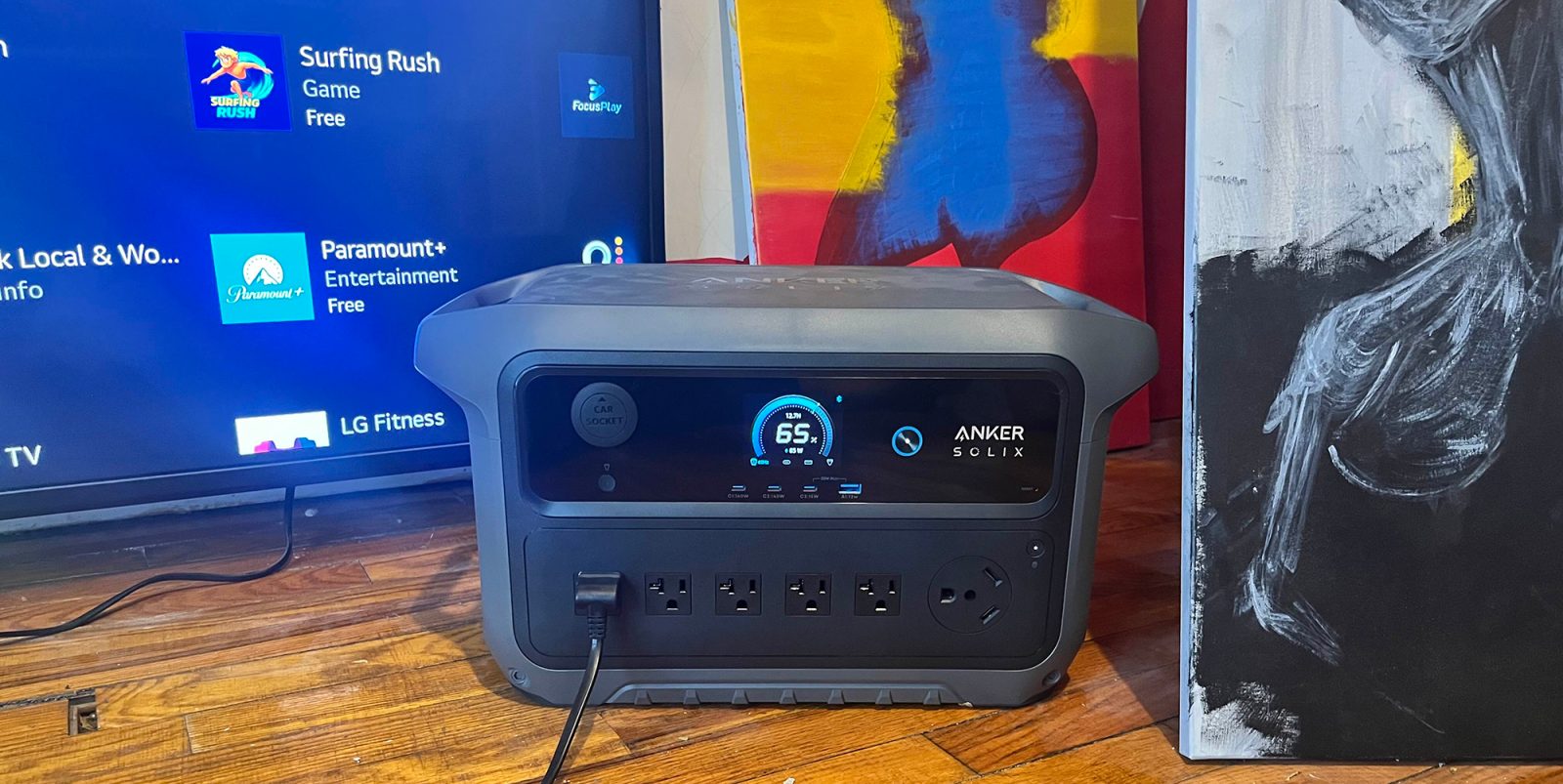
In October, I got to experience the first-hand upgrades that came through Anker’s second-generation series kick-off with the C1000 Gen 2 Power Station. It’s still been serving me well in the time since, but there have been some last-minute emergency needs that wouldn’t have lasted as long without the latest C2000 Gen 2 Portable Power Station that I got my hands on. It comes as a bolstered version of its predecessor, shrunk down from legacy models’ sizes, same as the C1000 Gen 2 station, but with some added benefits not seen on the C1000 Gen 2. Read on below for my hands-on impressions of this all-new solar generator.
At the moment, the new Anker SOLIX C2000 Gen 2 Portable Power Station comes in a single colorway option, though we do often see black “X” variations pop onto the market for physical retail stores. This new backup power solution comes bearing a $1,498 MSRP from the direct site, though discounts since November have seen the price drop anywhere from $679 to $1,000, with the brand’s Amazon storefront also seeing these rates. There are quite a few more bundle variations with this model, covering expansions, solar charging, or even alternator charging, and more.
Features at a glance:
- 2,048 watt-hour (Wh) capacity
- Scales up to 4,096 watt-hour (Wh) capacity
- Lithium Iron Phosphate (LiFePO4) battery cells
- 2,400W output (surges up to 4,000W)
- Features 10 output ports:
- 5x AC outlets (2,400W)
- 1x TT-30R port (2,400W)
- 2x USB-C ports (140W)
- 1x USB-C port (15W)
- 1x USB-A port (12W)
- 1x DC car port (12V)
- Power station can recharge via AC outlet, gas generator, solar panel (sold separately), dual AC and solar, and a car auxiliary port
- 88-minute 1,800W AC recharging
- 3-hour 800W solar recharging
- 58-minute 1,800W AC + 800W solar recharging
- 88-minute 1,800W generator recharging
- 3-hour 800W alternator recharging
- 23-hour 12V car port recharging
- Rated for a minimum 4,000 charging cycles with an approximate lifespan of 10+ years
- Each purchase comes with a 5-year warranty
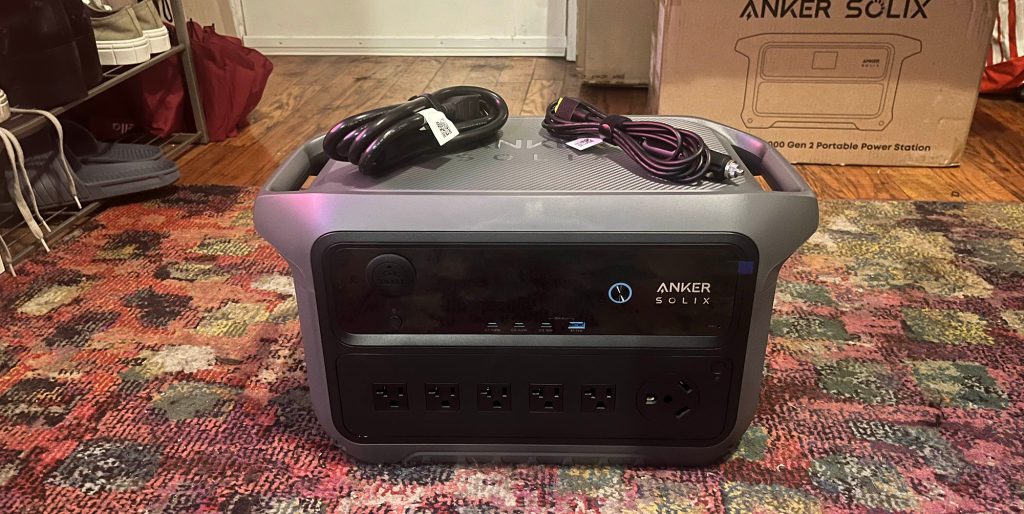
Unboxing Anker’s SOLIX C2000 Gen 2 power station
Much like the second-generation C1000, this second-generation C2000 arrived within a nicely padded box and was neatly organized, keeping everything inside nice and tightly protected. NYC is well known for having a mix of delivery experiences, so unless this thing is just chucked down stairs or dropped from high above, I couldn’t see it having arrived with any damage beyond the usual shakes and bumps. As with the previous model, the included contents were the station, the standard AC charging cable, and a cable to plug into a car’s cigarette lighter port, along with the usual booklets and setup guides.
As has been the case with every power station I’ve ever unboxed across multiple brands, it comes with 20% of its battery capacity already filled, allowing it to be paired with the companion app straight out of the box through your smartphone or tablet. From there, it was just a matter of about 45-ish minutes to get the battery complete topped off so I could begin using it.
As it is another Anker unit, I was getting the same user interface experience as I’ve had with the C1000 Gen 2 and the EverFrost 2 electric cooler that I reviewed earlier in April, 2025. It’s neatly organized, showing you boxes for DC and AC inputs, USB outputs, car charger outputs, and the AC output – all of them giving you real-time wattage numerals while also providing a tracking graph.
In terms of the actual controls you have here, there aren’t many options that you can get lost in, and all of them are very straightforward and easily explained, so you know just what they do. On the main page under all the output boxes, you can find a remote power button for the station’s display. Clicking the settings button, obviously gives you a full lineup of its basic settings that you can adjust to your preference – adjusting AC recharging levels, various automatic cut-off options to save the battery, device timeouts, screen saver timer, brightness levels, charging/discharging limits, and all the rest you’d expect.


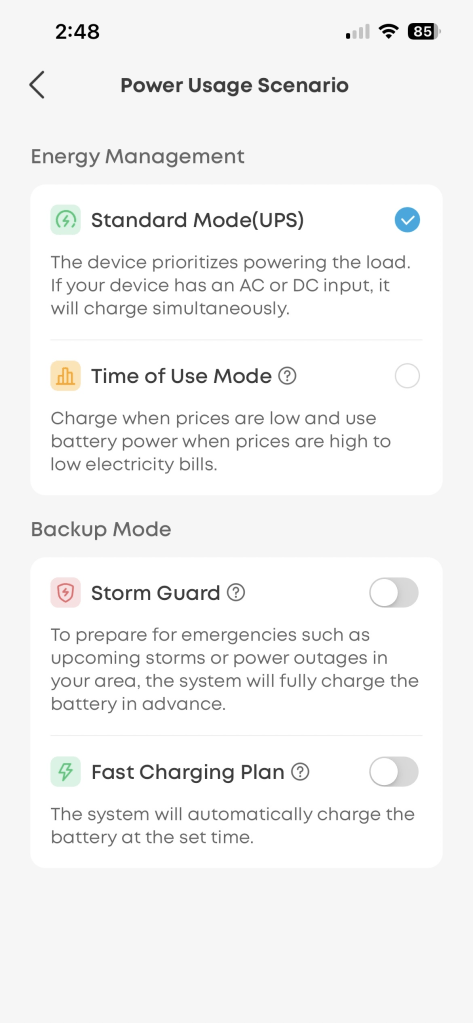
Now you get two main options for its energy management, either setting it to its standard mode that prioritizes powering the load, or the time of use mode that will allow you to keep it plugged into whatever is charging it, and activating things when prices are low, only using the battery power when prices rise, saving you money on your electricity bill.
There are also two backup modes: the storm guard, which is handy while preparing for any upcoming storms you may be informed about, or the fast-charging plan that automatically kicks in at set times.
Putting the Anker SOLIX C2000 Gen 2 station to the test
Now, whereas I mainly used the C1000 Gen 2 to power small wattage devices within my shared art studio space (a smart TV, wood burners, and other various small power-drawing tools), as well as support some one-day outings for personal device support, I’ve been experiencing the apartment below mine going through full gut renovations since getting it. Not only has this expanded the support needs further due to power being regularly shut off in the building for hours at a time, but as Anker has given the SOLIX C2000 Gen 2 power station comes with double the battery size of its counterpart, I wanted to run some more extensive testing on devices/appliances that would be as likely to accompany it on camping trips as needed during power outages.
So I used it to power these necessities: my studio’s 55-inch smart TV, my bedroom’s smaller 32-inch standard TV with a fire stick, my work laptop, my Verizon Fios internet router, an electric kettle, and an air fryer.
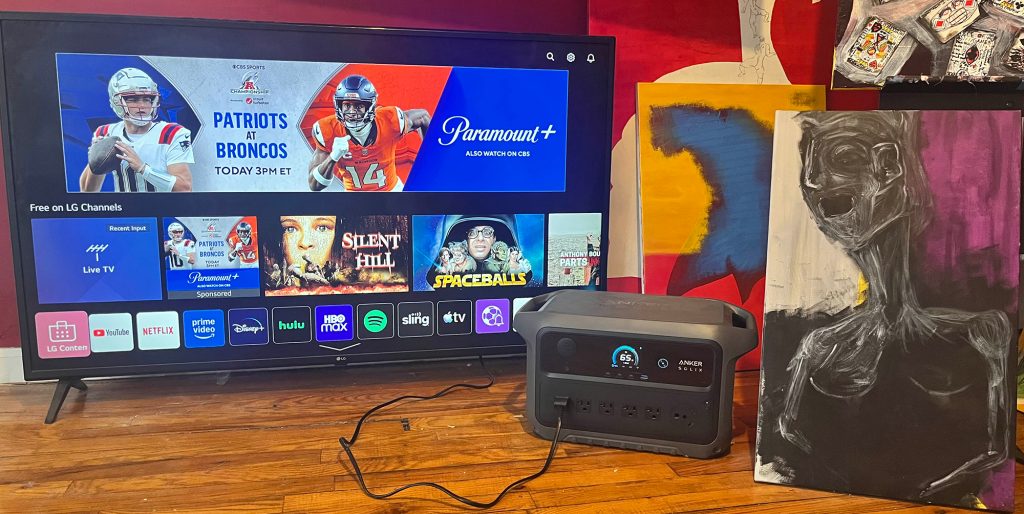
Let’s begin at the same place that was the most frequent in my previous review of its counterpart: My LG 55-inch smart TV, which seemed to draw around 73-75W when only streaming music, and peaked at 95W with a full movie playing. Even switching back and forth randomly, I saw the battery was brought down by about 20% every four hours, lasting right around 19-20 hours of total usage.
On the flip side, my smaller Samsung 32-inch TV, as well as the Amazon Fire TV Stick, both drew a maximum 58W of power together for a marathon of many 30-minute episodes, which lasted a bit longer than the larger TV at around 24-ish hours, so I could get 2 to 3, possibly more days of use out of it with careful planning, whether I became a fan for glamping or to retain my sanity during outages. On that latter note, my Verizon Fios router only ever drew around 20W to 22W at most to keep the internet going, so it won’t affect that timeframe in any extreme manner (same as when I used my laptop).
This leads me into what I consider my more important necessity during home blackouts: my Lenovo laptop, which pretty much paralleled the smaller TV above, except when I really pushed the limit by opening slack, photoshop, having multiple tabs open as I often do for work on my desktop, and even running others to really test how high I could make it spike, like music apps, YouTube, Netflix, and more. All-in-all, it averaged out between 57W and 65W when I used it like normal, and rose between 85W and 122W (its peak) when I really pushed it and was using more programs/apps than I’d ever actually have opened and running at once (though I did not test any games). The station has the capacity to last me at least 24 hours total, if not a few hours longer than that. Factoring in the 20W of router needs, I know I could stretch its use out over a few days for things like work, while just emergency news/information gathering could be stretched to weeks or more.
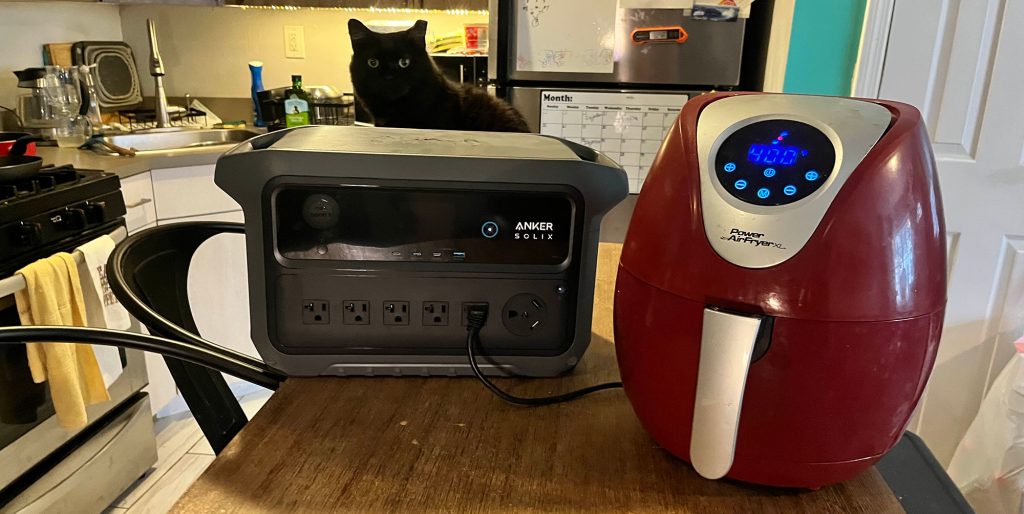
Now, I’m sure no one is surprised to hear that if you will primarily be using this to power kitchen appliances, do not expect the C2000 Gen 2 to last as long as it did for the above devices, as anything that will be functioning for cooling or heating purposes will obviously be drawing significantly more power. In the case of my air fryer, it pretty much stayed between 1,413W and 1,425W during a 20-minute cook at its maximum temperature settings, draining the battery by 17% during the process. If you’re going to be using it to whip up some quick snacks or easy meals, you’ll likely get 90 minutes of usage out of it at best before the battery is drained, depending on what you’re using and what levels you’ve set for it to operate at.
Likewise, the electric kettle – filled to its full 1.8L capacity and set to boil at its max 212 degrees – peaked a bit higher at 1,485W and completed the task in 8 minutes, taking 10% of the battery capacity with it. Now, you won’t likely need to run this appliance as much as an air fryer, countertop oven, or a microwave (which peaked the highest at 1,600W), but from a full battery, it’s safe to say that you’d only be getting about 75-80 minutes of non-stop use.
Of course, for camping needs in particular (though not discounting at-home use), this is why it’s a smart option to bundle Anker’s SOLIX C2000 Gen 2 with one of the brand’s portable solar panels, of which I scored a 400W model to go with mine. Unfortunately, trying it out on my balcony was a no-go, as the sun never seems to want to shine on it while also having a massive overhanging tree in the way, too. I was, however, able to pick up a 250W to 350W range of input when setting it up out on the sidewalk out front.
While it’s rated for 400W, just keep in mind that real-world conditions tend to often only yield around 75% to 85% of the input, but if you’re using it in your home’s open backyard during outages, or within nature while camping, you just need to find a nice spot with constant sunlight and leave it up, allowing the power station to frequently top itself off over the course of hours.
gadgetnewsonline’ take
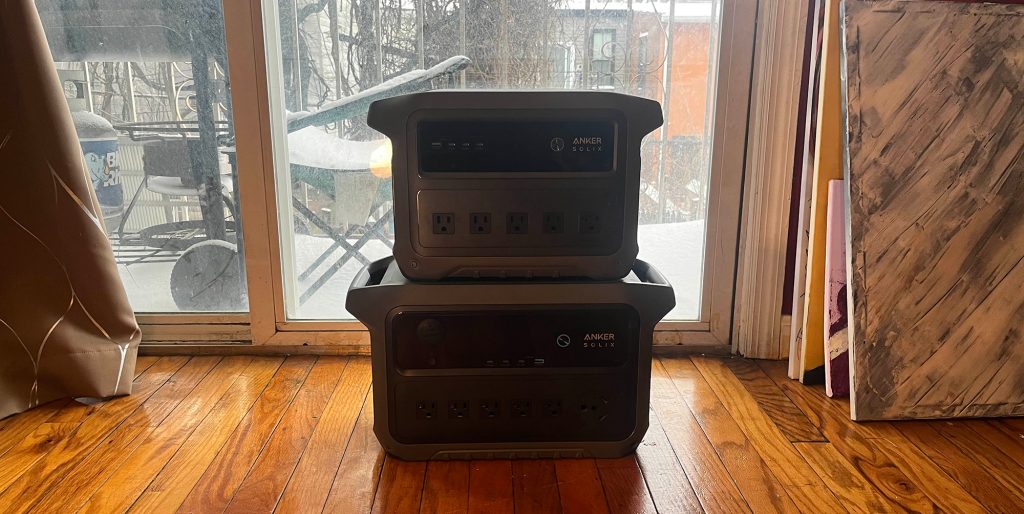
Overall, Anker has given folks another solid option to cover the various bases of backup support needs with this SOLIX C2000 Gen 2 power station. Personally, I much prefer the C1000 Gen 2 model due to its much lighter weight that I can more easily manage, though that model is best for smaller-scale usage and doesn’t offer the same expandability. It’s nice that you can at least double the capacity on the C2000 Gen 2, and of course, if you want to go bigger for greater appliance or even home-backup support, I definitely recommend the F3000, F3800, or F3800 Plus power stations over these smaller units.
That being said, this thing came to me when I really needed the added capacity most (and didn’t even realize it), as I’m not sure if I’d been able to handle some of the longer-lasting induced power outages from the construction, especially when getting close to spilling into full-day timeframes. Unfortunately, I do not own an RV, so there’s no way for me to tell just how well the TT-30R port on this model will handle the support in such a vehicle, but I’m sure with solar paneling, it will offer some decent backup companionship all the same (not as well as the larger models mentioned above).
I am planning some weekend camping trips out of the city, as well as getting back into some street/guerilla performance, and reopening my mobile art gallery around NYC once the warmer weather rolls back in, so I am curious to see how much both the C1000 and C2000 stations will contribute. There’s also just the practicality for whenever I do any outside labor with tools here, too, giving me solid options for keeping things running. All-in-all, I’m very much loving Anker’s continuing releases of second-generation power stations, and look forward to seeing what’s next on the docket.
You can currently find Anker’s SOLIX C2000 Gen 2 Portable Power Station on the brand’s direct website, at the brand’s official Amazon storefront, or other retailers – all starting from a $1,498 MSRP, with discounts regularly bringing relief from that price, so you should never expect to actually pay that much.
Buy Anker’s SOLIX C2000 Gen 2 Portable Power Station


FTC: We use income earning auto affiliate links. More.




Comments