

I finally did it—I submitted my Pokémon cards for grading for the very first time. And instead of going with PSA or Beckett, I decided to try something different: TAG. TAG is one of the newer grading companies out there, and what makes them interesting is that they use AI to grade cards, not people. This wasn’t about resale value. I just wanted to experience the entire process and see if it’s worth it for a casual collector like me. I found there to be a lack of content online on the step-by-step nuanced detail, so I figured I’d do it myself.
Be sure to see the video below to get my hands-on experience of grading with TAG. This is just part 1 of a three-part series that will show every step of the process.
Setting up (Cost, cards, & account creation)
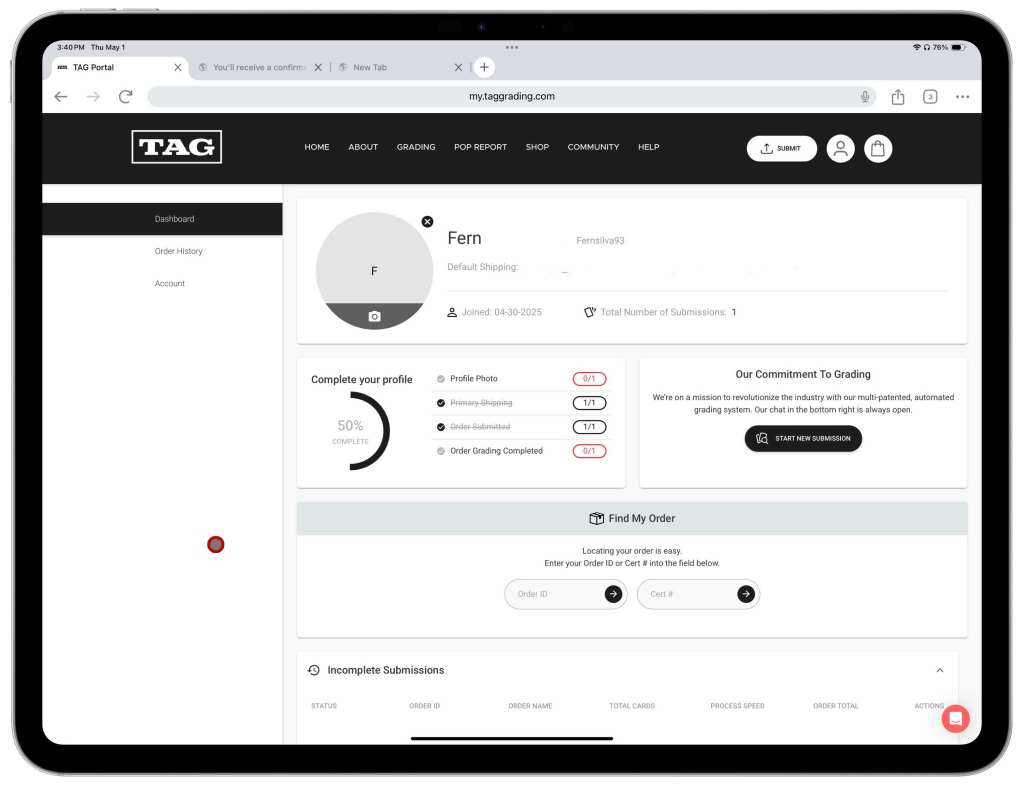
Getting started was pretty straightforward. I created a TAG account (which gives you a clean dashboard to track everything), and chose their bulk 20-card grading option, which averages out to $15 per card. There are some insurance add-ons, but it will cost $19 per card. That’s about as affordable as it gets in the grading world. The best part is that they don’t upcharge you if your card gets a 10, which PSA does (always thought that was weird).
I also picked up the TAG submission kit, which made things easier. It comes with sleeves, a case, a deck box, prepaid FedEx shipping both ways, and even a little guide. It is not needed at all, but I figured I would have had to buy penny sleeves and a box and other shipping equipment, so I went the easy route. It also includes $1000 worth of insurance if you get their kit. The kit adds an additional $50.

Card submission experience
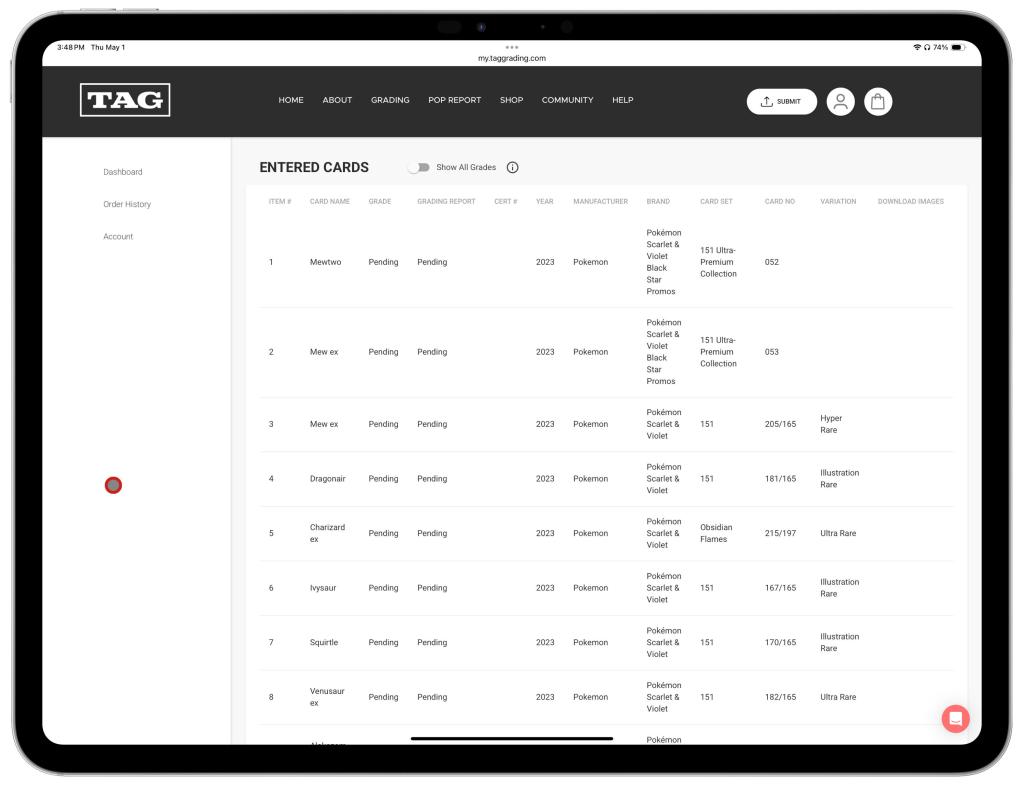
So now that I had my submission paid for, it was time to get my cards ready to send. For this first submission, I sent in 20 cards total:
- Some 151 hits like Charizard, Blastoise, and Venusaur
- A few Celebrations favorites
- Mew and Mewtwo promos
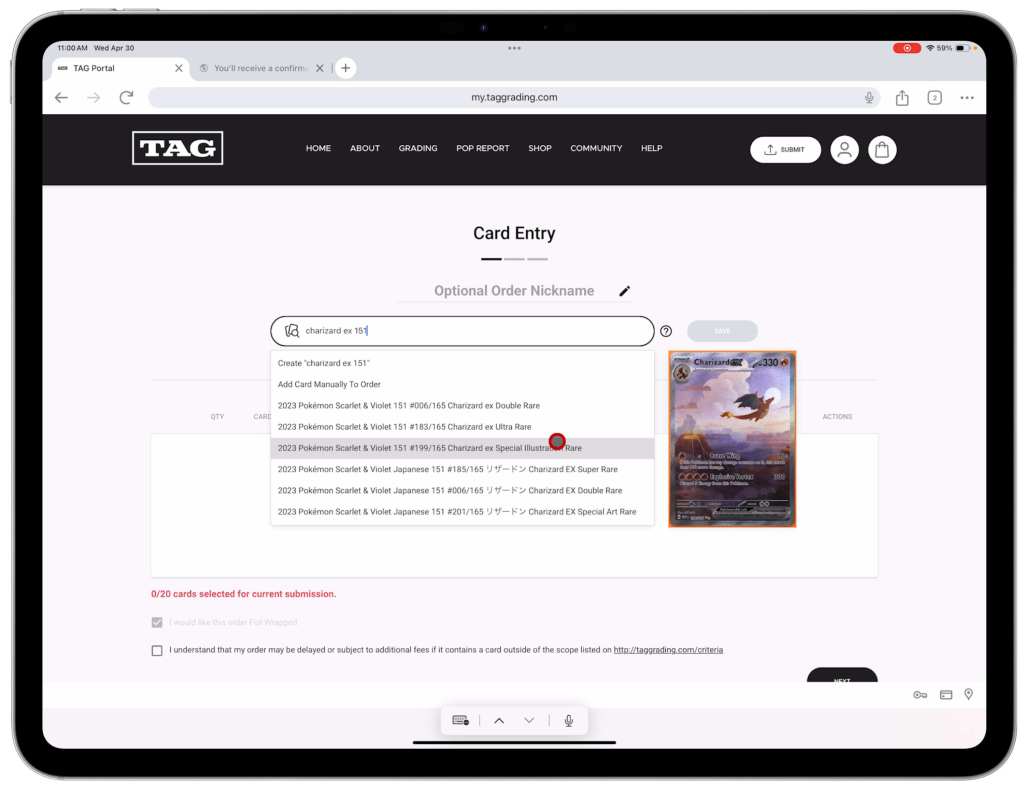
Each additional card after 20 is still $15 per card. You have to manually enter each card into their system, which was simple, but I did notice some preview images were off (like showing Japanese versions instead of English ones). The text info was still correct, so I entered them anyway and made a note to watch for any issues.
What’s next
Getting a grade for cards takes a long time. It is estimated that it will take 30 to 45 days to get my cards back (which I haven’t even shipped yet). So, the next step for me is to wait for the submission kit to arrive, then get my cards ready to ship out and send them. That will be part two of this review series, so stay tuned to see what that process is like. Then, once sent, we wait for the results!
Again, I just wanted to show people what it was like to go through this process because it is a bit intimidating for someone who has never done it. It’s expensive and long, and you are handing over your valuable cards, hoping this company will do right by you.
Let me know if you have ever used a grading service before. Have you tried TAG before? What advice would you have for someone getting into this for the first time? Let’s discuss below.


FTC: We use income earning auto affiliate links. More.


Comments