

In prior Kitchen Tech columns, I’ve shown you succulence-creating sous vide water baths, and discussed the joys of rotisserie roasting. This week’s column discusses another restaurant-quality cooking tool that home chefs can easily use: pressure cookers. Similar in appearance to regular lidded pots, pressure cookers rely on a bit of science — specifically, the higher the pressure, the quicker things cook — to create finished dishes up to 70% faster than normal.
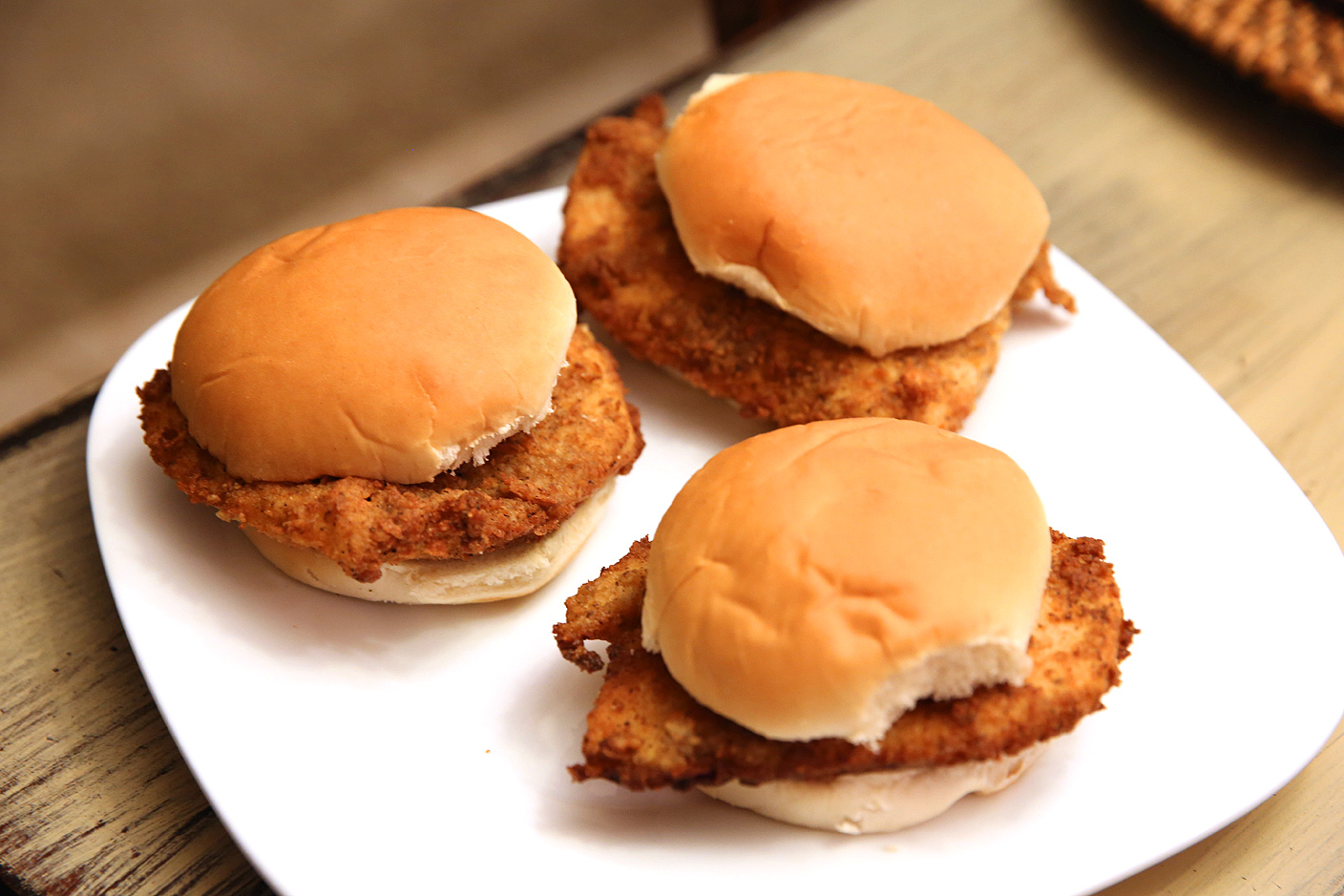
This is the key secret behind Chick Fil A’s renowned original chicken sandwich, as well as some of the country’s best fried chicken — pressure cookers can rapidly make food that’s crispy on the outside and soft on the inside, or entirely soft, depending on your needs. They’re also the #3-ranked “invaluable modernist tool” in the next-generation cookbook Modernist Cuisine at Home, notably placed one spot ahead of sous vide water baths. But they’re not (yet) ubiquitous in the United States. Below, I’ll explain why a pressure cooker should have a place in your kitchen.
The Basic Concept
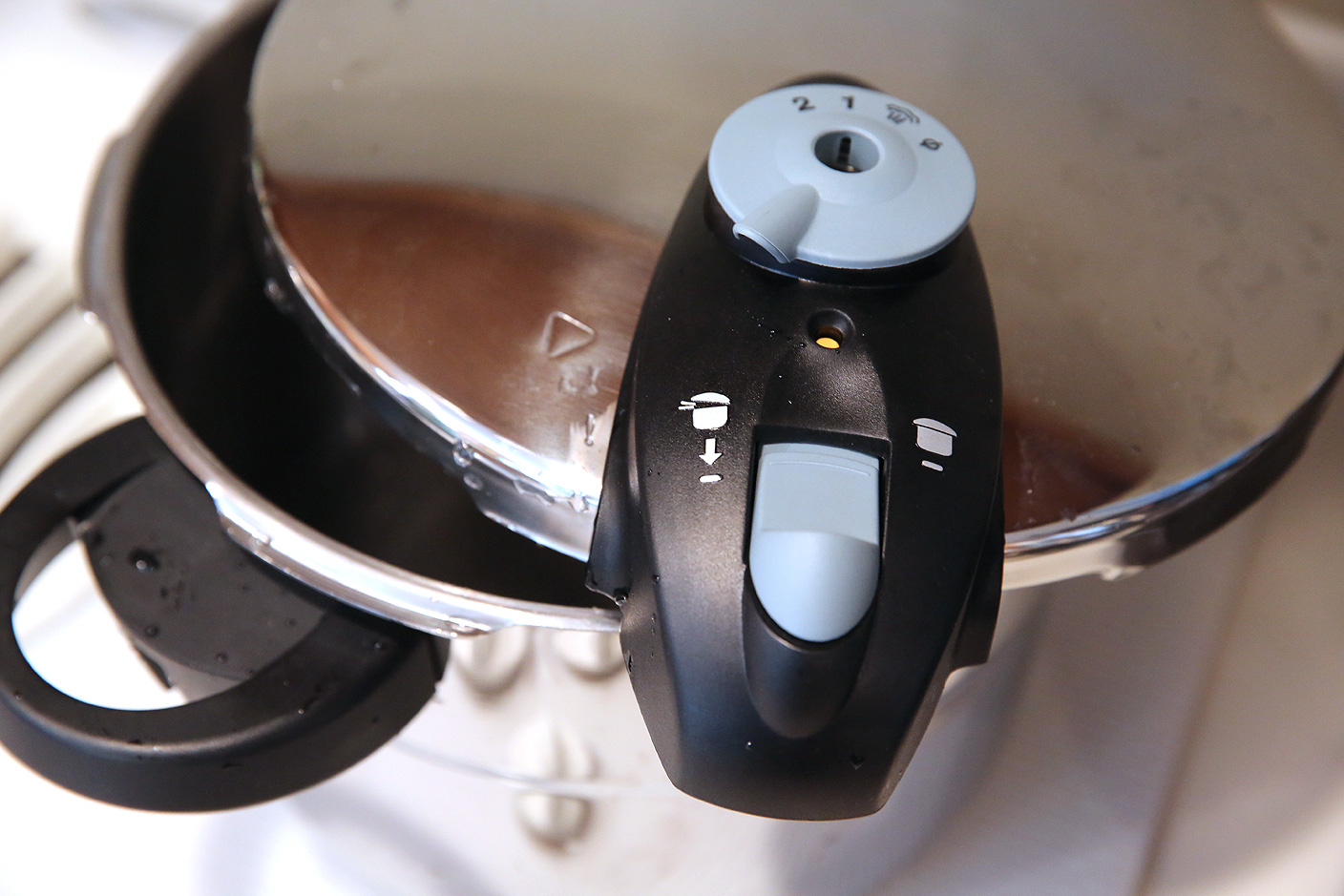
All pressure cookers work the same way. A special vacuum-sealed lid goes on top of a pot, locking into place for safety. As heat is applied to the bottom of the pot, steam builds up inside, raising the pressure to 15PSI in the sealed chamber. This pressure change increases the boiling point of liquids, which makes food cook faster.

Pressure cooking also makes food juicier. Unlike typical stove-top cooking, where moisture gets released and food dries as it cooks, pressure cooking seals moisture in — just like sous vide. Pressure cookers, however, operate at high temperatures and can cook with either oil or water, whereas sous vide runs at lower temperatures and is limited to cooking with water. These differences enable pressure cookers to caramelize, create crispy outer skins, and work wonders with batter, all at rapid speeds. The photo above shows the pressure cooker filled with oil and battered chicken, 30 seconds before the lid was put on.
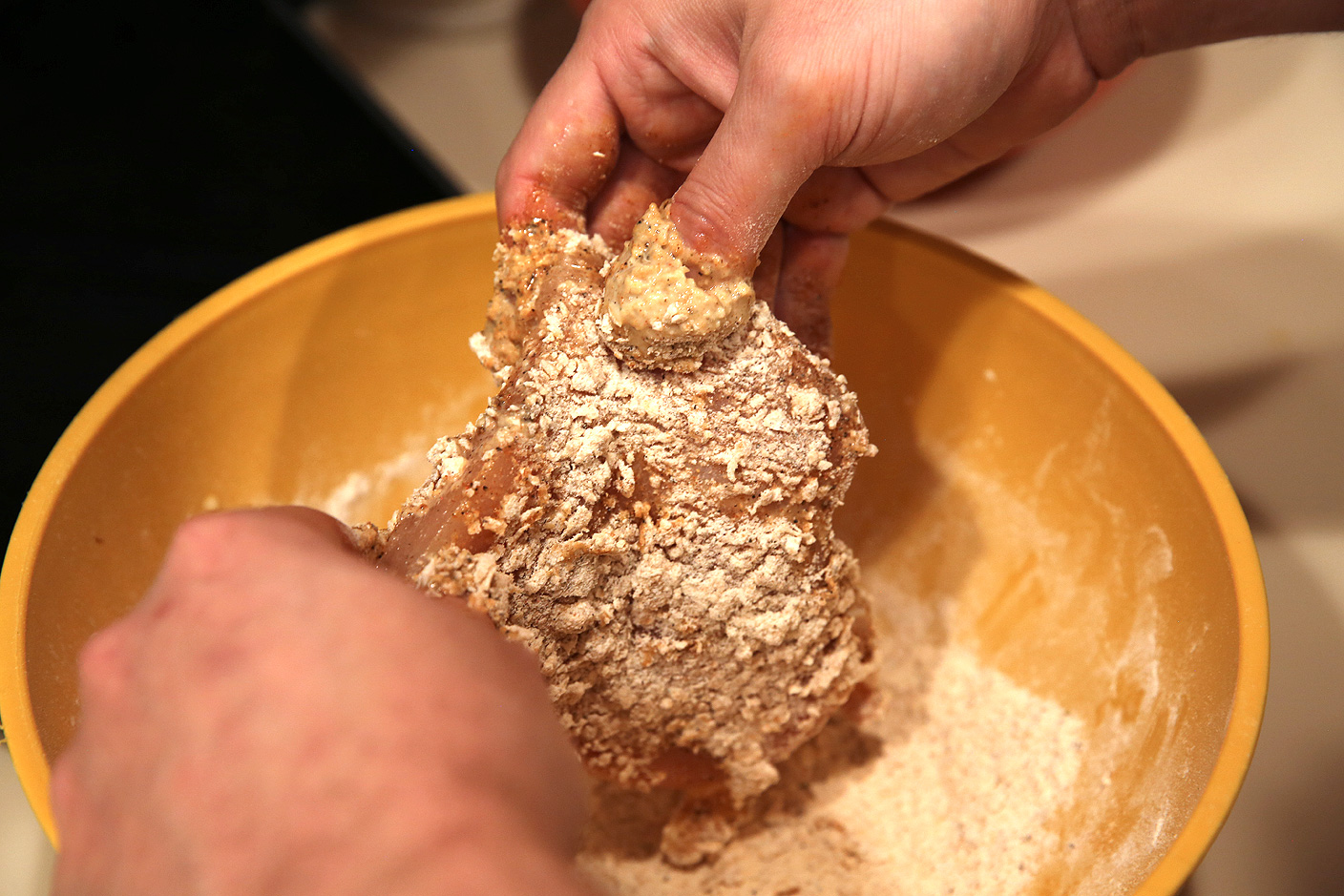
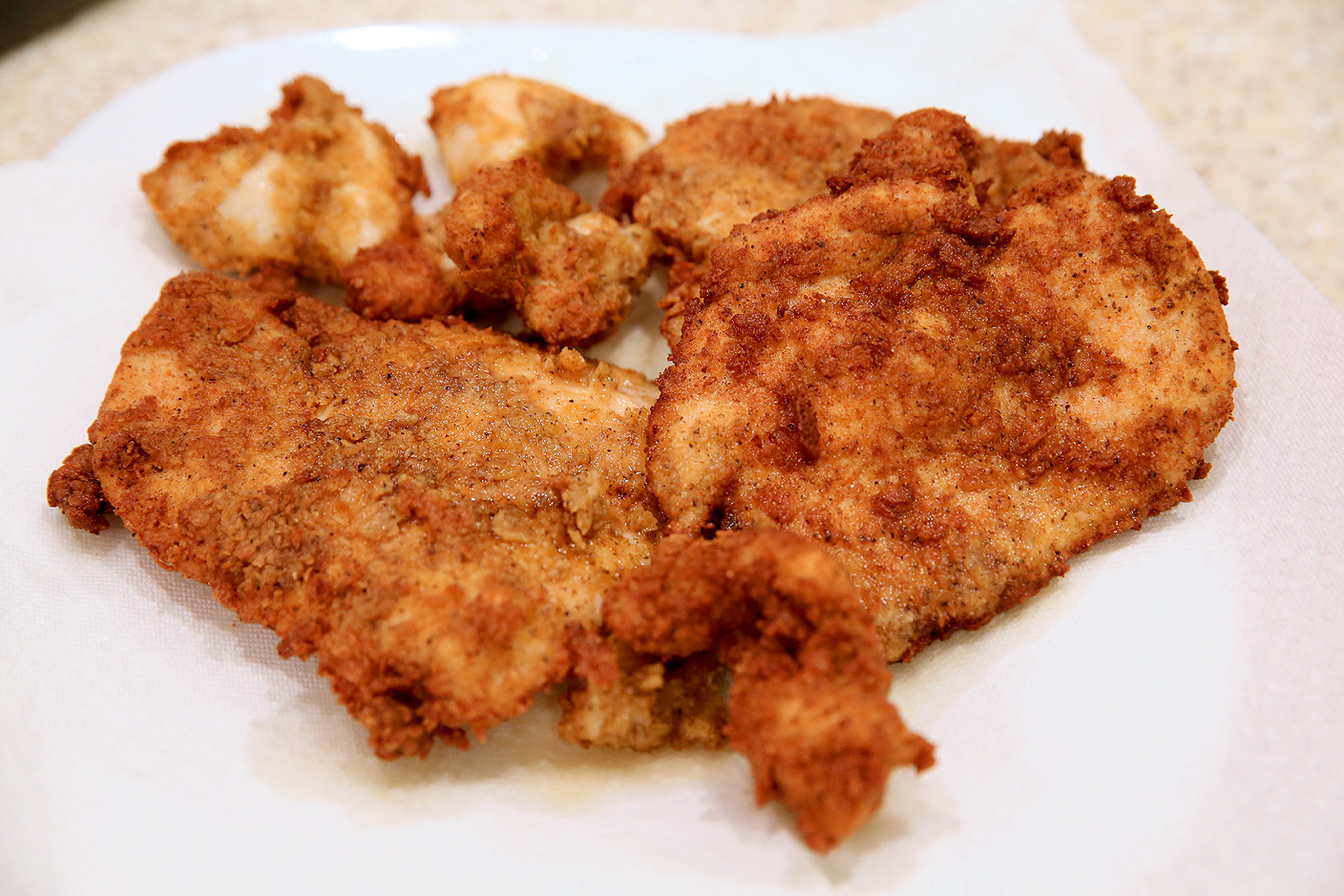
That’s how Chick-Fil-A is able to offer phenomenal breaded chicken sandwiches so quickly after you’ve placed an order — and how you can skip Chick-Fil-A to do the same thing at home. The chicken here went from raw to finished (and restaurant-quality awesome) in only three minutes, following this Serious Eats recipe and these simple pressure cooking instructions. Time-consuming rice (paella) and bean recipes can see their cooking times cut in half with pressure cooking; caramelization caused by the higher heats can even add depth to soups. The speeds, textures, and flavors achieved by pressure cooking would be impossible with sous vide, which is why pressure cookers rank so highly with the Modernist Cuisine team and other professional chefs.
Two Major Options
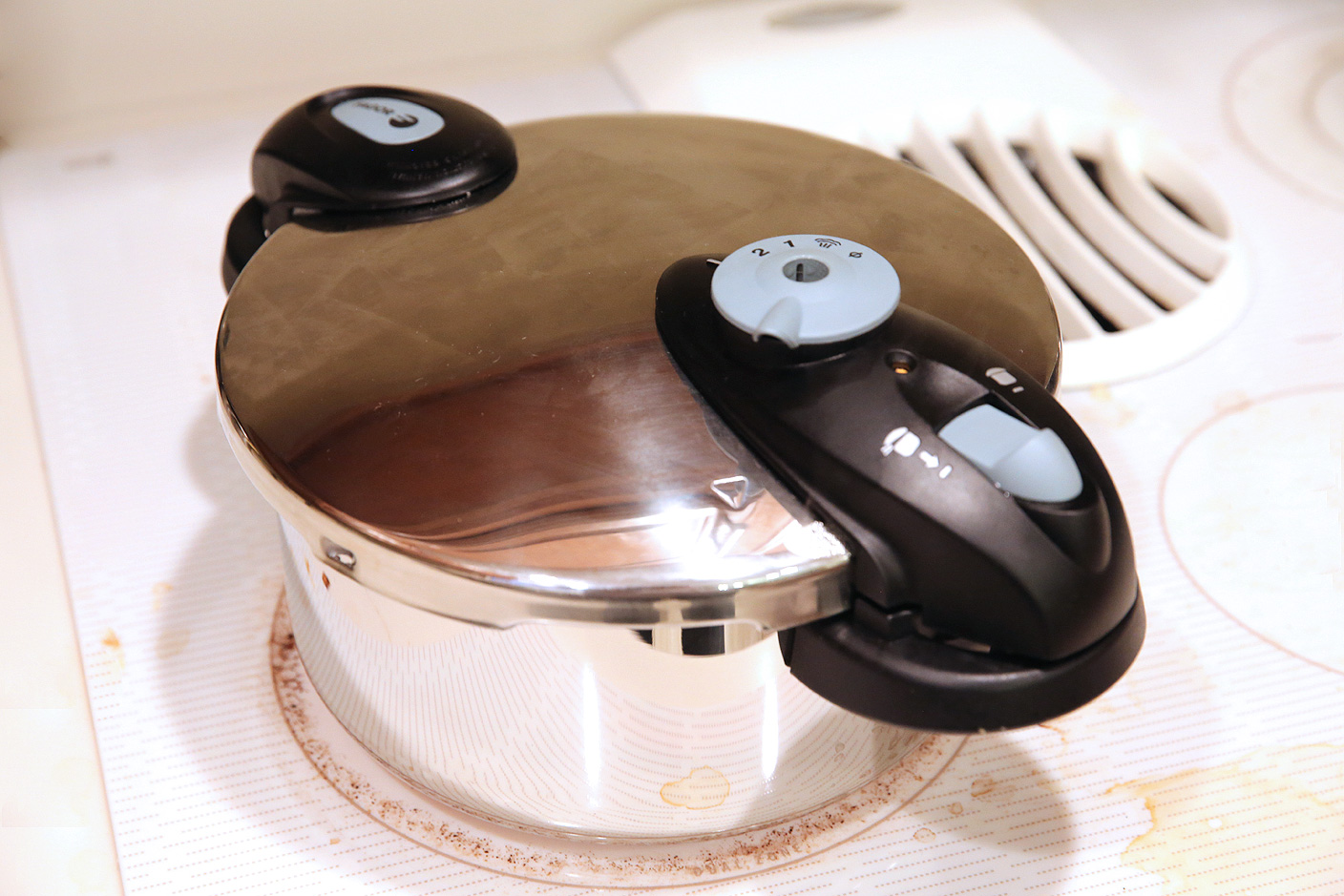
Pressure cookers come in two main variants: standalone units, and ones that sit on a stovetop. Professional chefs tend to prefer the stovetop versions, as they can typically last longer without a major part failing — warranties are in the 10-year range, and some people have used the same stovetop pressure cookers for over 20 years. They can be placed wherever your stove has an open burner, and work on pretty much any type of stove, including induction surfaces. You just turn your stove’s burner on and use the pressure cooker like any other pot.
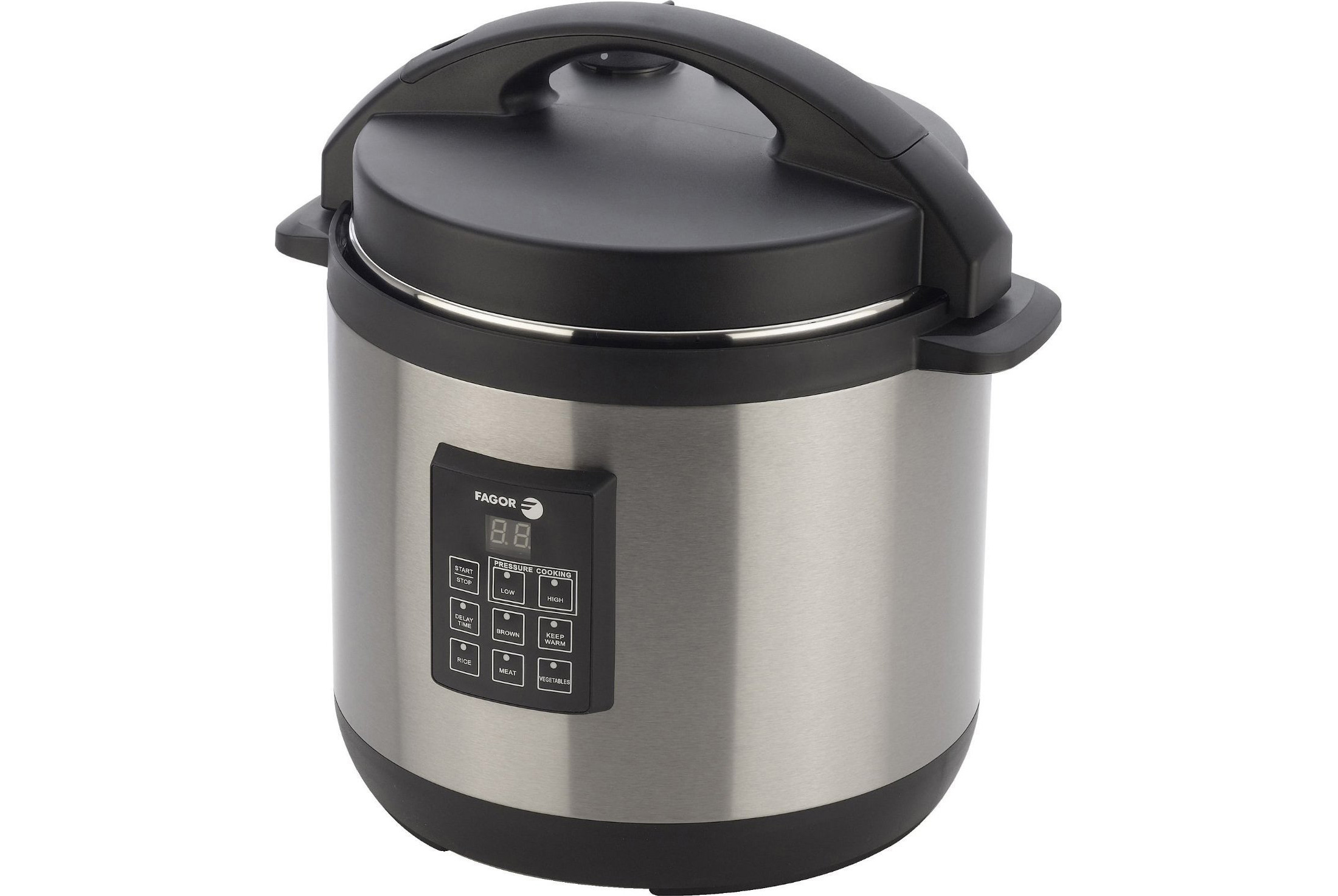
By comparison, standalone units look like rice cookers and can operate wherever you have counter space. They’re reasonably affordable, and since they can replace rice cookers, convenient for kitchens with super-small stoves or otherwise limited space. However, the number of parts inside increases the risk of failure (and need for replacement) over time.
Pressure Settings and Cooking Time
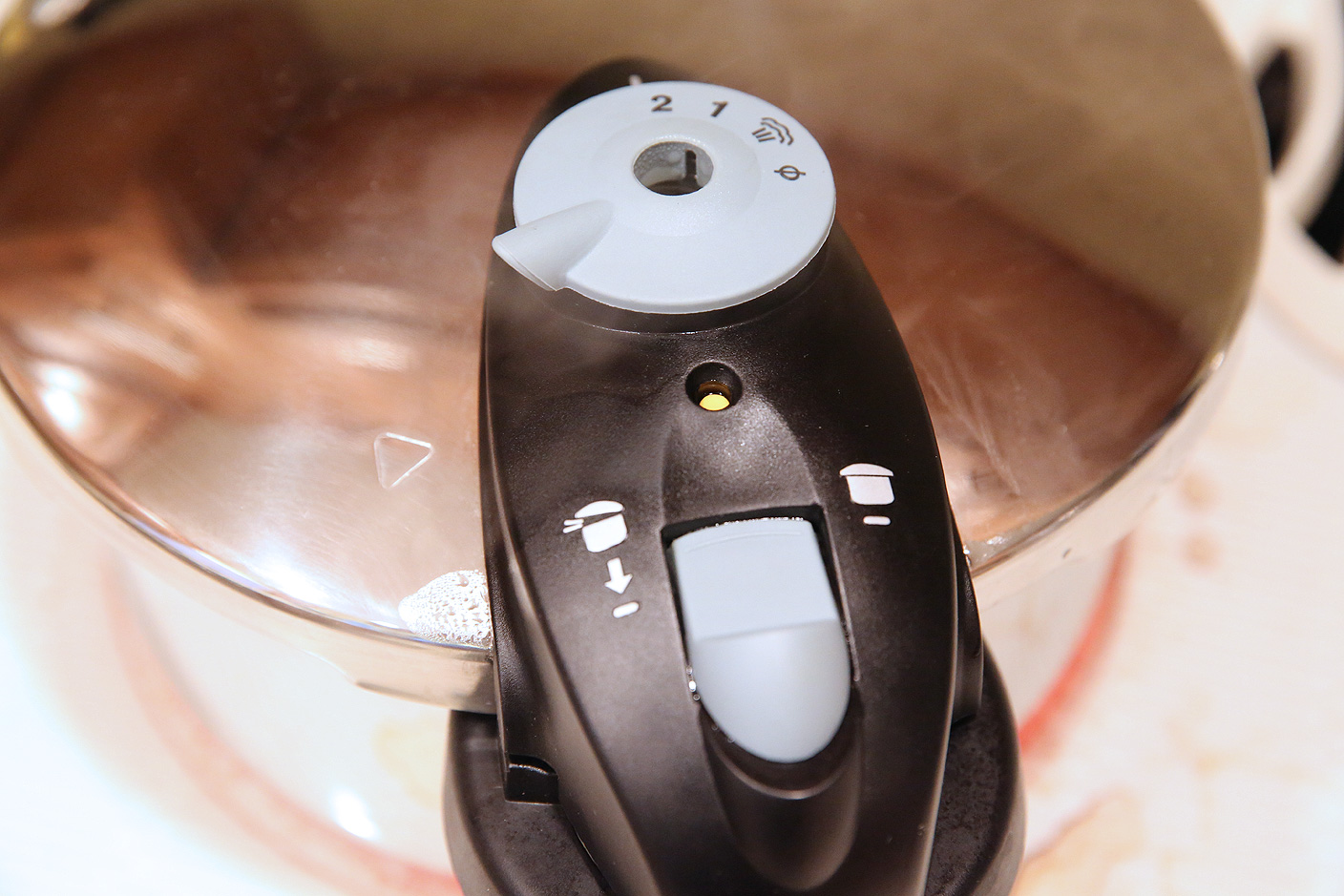
If a pressure cooker has only one setting, it’s 15PSI, and most pressure cooker recipes include cooking times based on 15PSI use. But some pressure cookers have a second, “gentler” setting that’s manufacturer-set at 5PSI, 8PSI, or 10PSI. Each alternative will be called “low” as a contrast to 15PSI’s “high.” This low setting reduces both the pressure and boiling point temperature for delicate items such as fish, which superficially sounds like a nice feature. It also increases the cooking time, as lower pressurization is closer to a regular, unsealed pot.
Professional chefs have told me that most people probably don’t need dual-setting pressure cookers, as there isn’t a huge time savings or quality improvement between pressure cooking on “low” versus just using a standard covered pot. This can differ based on whether the second setting is 5PSI or 10PSI, so results will vary between both pressure cookers and people. My advice: unless you have a specific application for lower-pressure cooking, consider a second setting a frill, not a necessity.
Size, Materials, and Features
Pressure cookers commonly come in sizes ranging from 4 to 10 quarts. Consider the 4-quart models to be a bare minimum for making rice, beans, or frying; there are smaller models that will quickly prove constraining. Similarly, unless you plan to use your pressure cooker for canning, you don’t need one with a 10-quart or larger capacity.
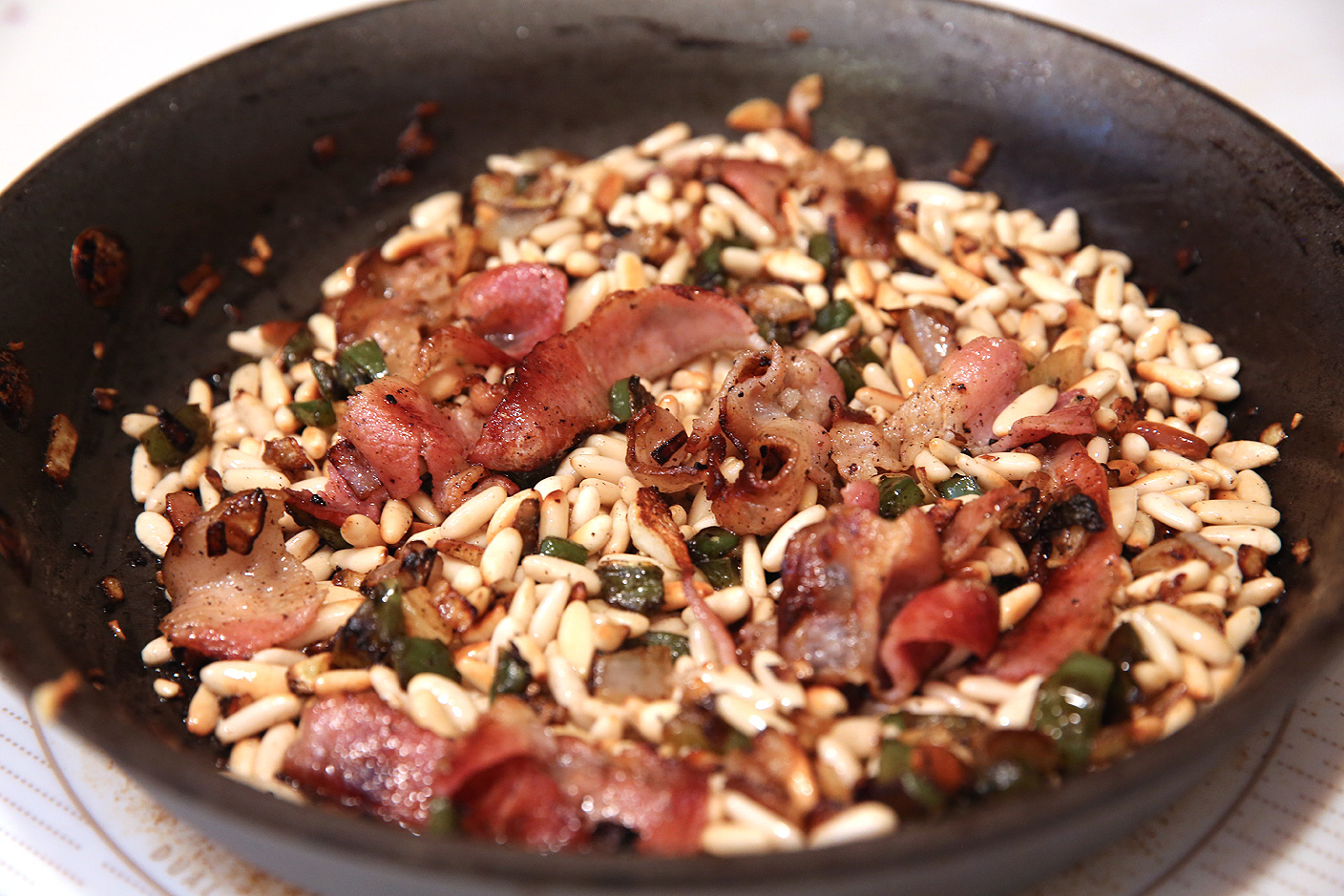
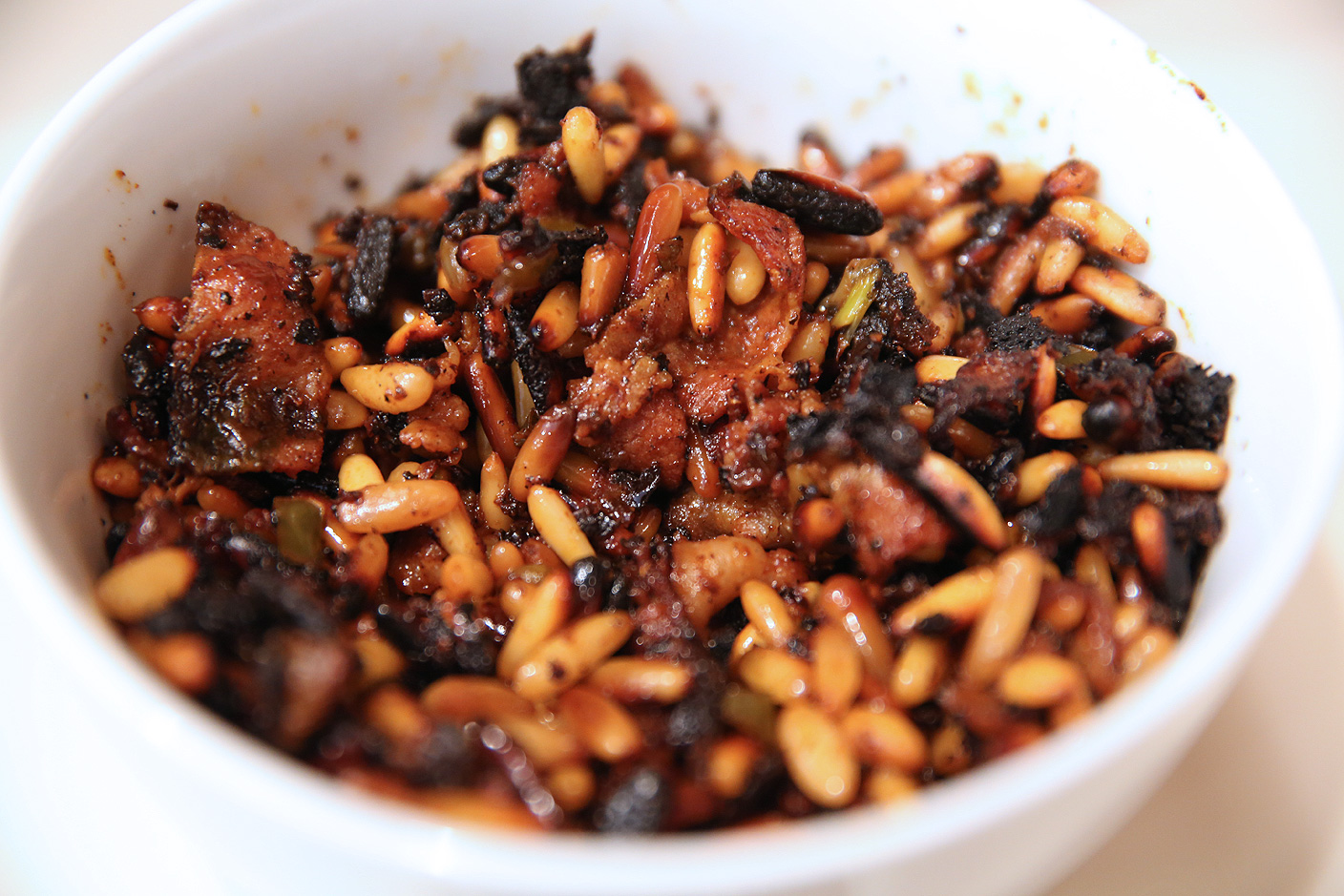
I purchased a set with a dual-setting lid and two pots (4-quart and 6-quart), and there are advantages to doing that, but if I had to pick only one size for everything I will likely be cooking over years of use, a 6-quart pressure cooker would be it. Even so, this entire pan of Cajun-flavored pine nuts (above) filled only a one-person bowl after being pressure-cooked (below). Many other one- to two-person dishes would have more than enough room to cook in a 4-quart pressure cooker.
Safety is a critically important consideration with pressure cookers. Because pressure and steam build up inside the container, the pressure cooker needs to be designed with both a tight lid-to-pot seal and a valve to release the pressure before it’s opened. Steam is also constantly released by the valve during the cooking process in order to regulate the pressure. Any company that’s been making pressure cookers for years will do a fine job implementing both of these features, but it’s up to you to learn (definitely before using your cooker for the first time) how to open and close the lid properly, as well as how to use the pressure-releasing valve. I can personally confirm that burns from escaping steam can be nasty, though they can be prevented if you know how to lock and unlock the lid.
The best pressure cookers tend to be made from 16/10 stainless steel, which can withstand high pressures and last for a long time. Aluminum models are cheaper, but more easily damaged and frequently replaced. I personally wouldn’t take a risk on an aluminum pressure cooker.
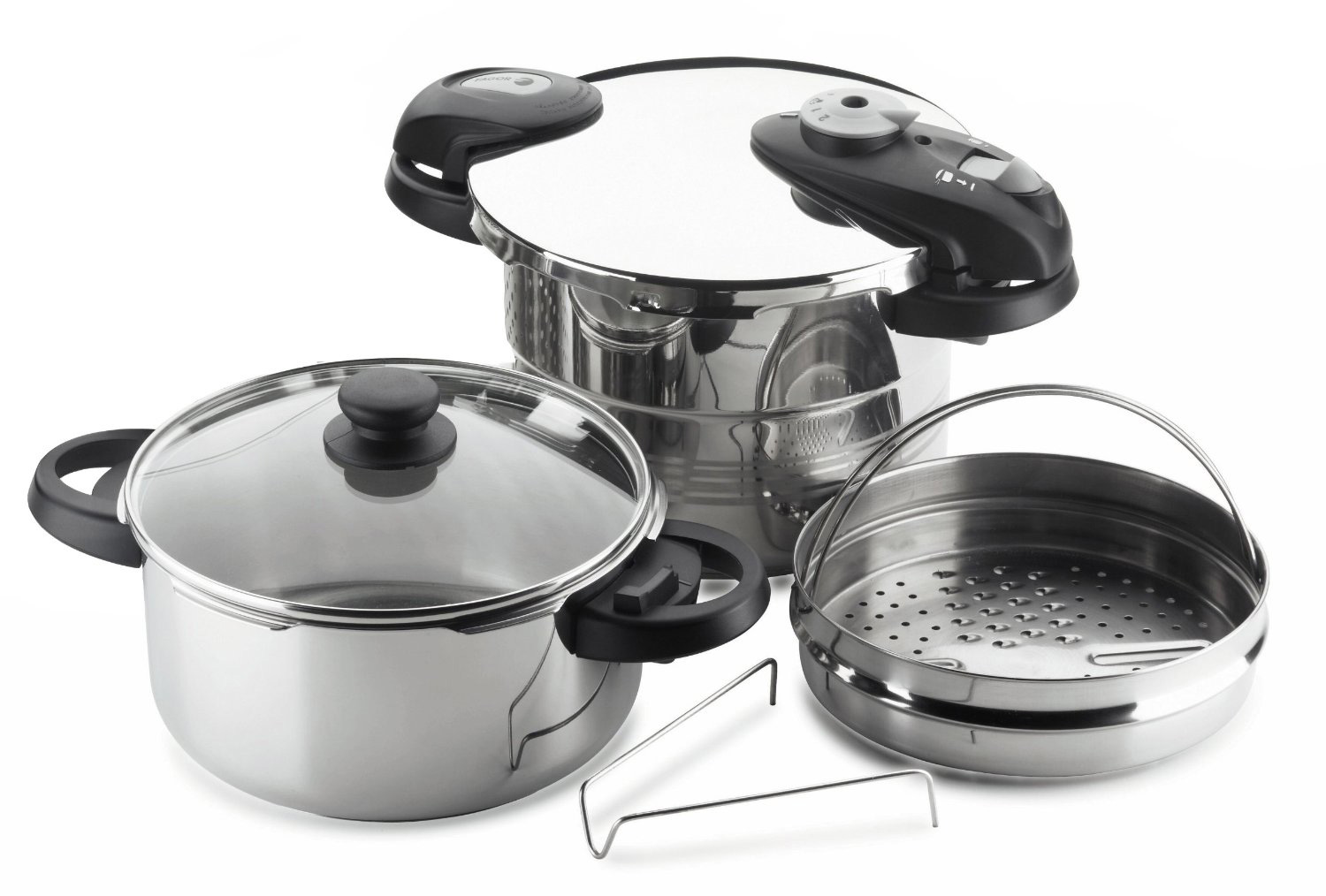
When it comes to brands, there are a bunch of choices and two real stand-outs. The Spanish company Fagor has a particularly excellent reputation, and is one of two brands recommended by Modernist Cuisine at Home. (Kuhn Rikon is the other; its pressure cookers are typically much more expensive.) I purchased a complete Fagor Futuro stovetop set for $190 because it has a compact, modern design with smart safety features, but an entry-level $70 version called the Fagor Splendid (6-quart) has enough features and capacity for most needs.
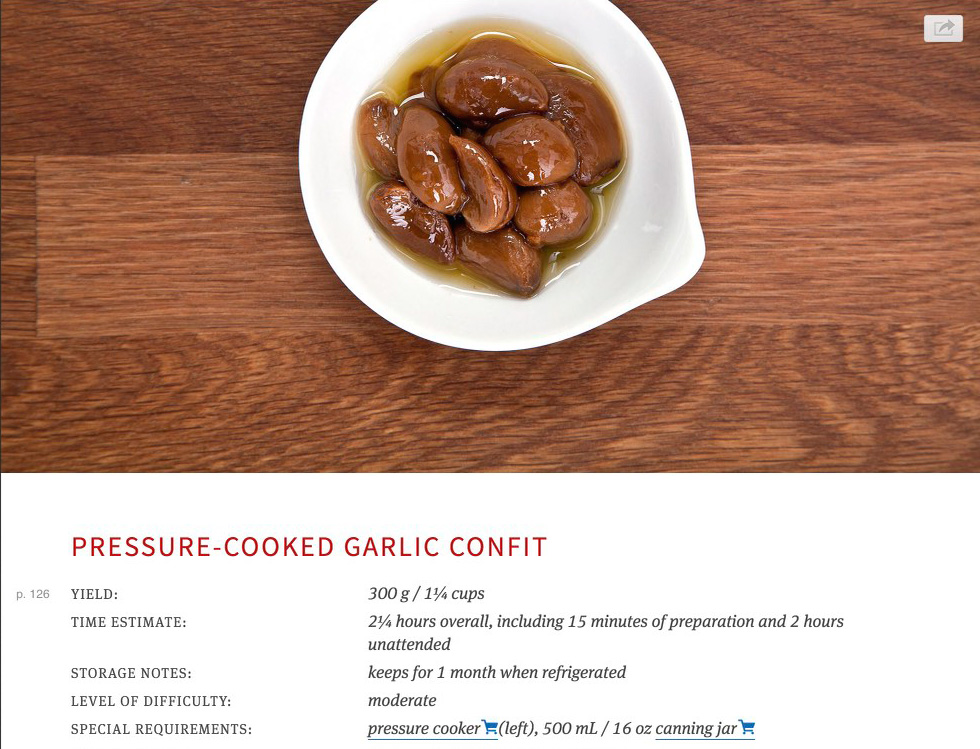
Only consider a much larger (10-quart, $100) size if you’re prepping food for a lot of people at the same time, or plan to also use your pressure cooker for canning. The Modernist Cuisine team has a cool Mason jarred Garlic Confit recipe that uses pressure cooking to remain jar-safe for two months. But when you’re not canning, you’ll probably only use a small bit of a large cooker’s volume when making food for two or four people. To build up steam, pressure cookers are designed to be used when they’re at most 2/3 full of food; larger cookers are built with space for cans or jars of vegetables, non-acid fruits, and other items requiring high-heat bacteria removal.
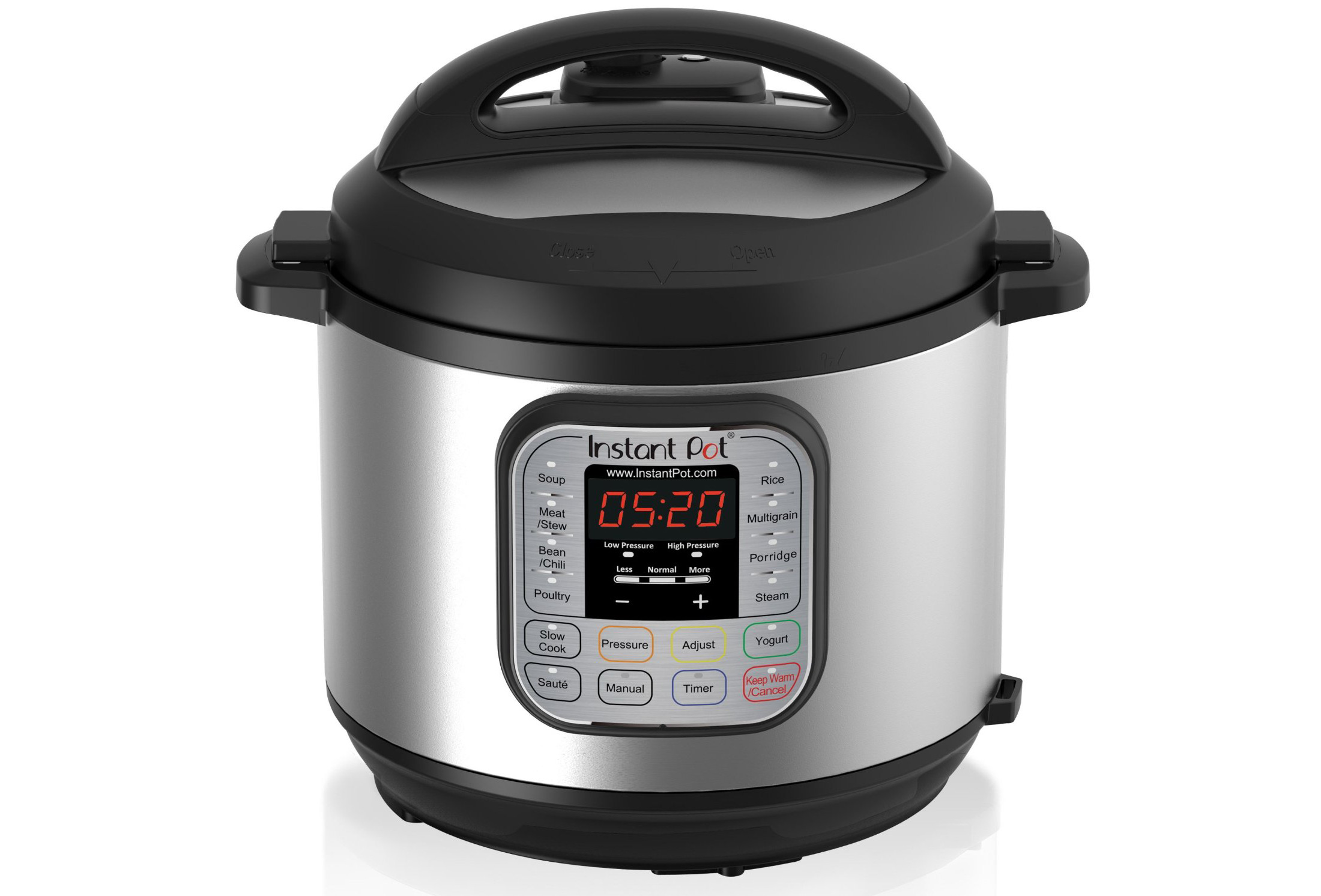
If you want a standalone pressure cooker, Instant Pot’s $135 6-quart IP-DUO60 is Amazon’s best-selling electric pressure cooker, with a 4.7/5-star rating. Fagor makes a $90 6-quart alternative that’s not as flashy but more affordable with the same cooking capacity, rated 4.4/5-stars. There are other options, including Cuisinarts, but they tend to rate lower than the aforementioned picks.
Read More Kitchen Tech!
Want to learn about other professional-grade food and beverage solutions for your home kitchen? Read more of my Kitchen Tech columns and reviews here, including


FTC: We use income earning auto affiliate links. More.

Those cajun pine nuts look amazing. Is there a recipe you can share or link to?
Here’s the DIY recipe, minus specific quantities, via Chef Scott Kollig: “Sauté some Cajun trinity (onions, green peppers, and bacon) on high heat, add a pinch of minced shallot and garlic, a pad of butter, and lower the heat to medium.
Cook until fragrant, then add the pine nuts, cook for two minutes while constantly stirring, add a little tomato paste and deglaze with a splash of white wine, then add veal stock or chicken stock halfway up the pine nuts and add some Demi glacé sauce (Wegmans carries it), then cook at 15 PSI for 10 minutes.
Run the whole pressure cooker under cold water and carefully remove the lid. Bring back to a boil and reduce until thickened to nappe. Season and enjoy!”
Thanks, I have been wondering about pressure frying as I know thats how KFC fried chicken are done. We already have a Carico electric pressure cooker, I also checked the Fagor user manual on their web site for thier pressure cooker. Both Carico and Fagor says never to deep fry or pressure fry as its dangerous, can cause fire or serious damage.
Jeremy – firstly let me say that I have thoroughly enjoyed the series of columns – and look forward to many more. Thank you – and I mean that in a large way. I’m obviously hoping that with my gratuitous (yet genuine) comment you will not toss the balance into the trash heap.
As to the subject of pressure cookers (which followed the Rotisserie Oven chapter) – I wonder whether you have any specific insight or experience into another product. Forgive me before I mention it – because it is somewhat like the as-seen-on-tv Showtime Oven. One where the item I’m asking about fits the bill of being shilled at a county fair booth to bumpkins. So allow me a bumpkin moment….
The item is: the Wolfgang Puck Pressure Oven. Aside from the obvious Michael Scott bacon cooking episode references, it appears that this kitchen gadget could be worthy of discussion in this column. It uses pressure, heat and air to obtain results otherwise unavailable to the home. Results that you have been seeking in your last two columns. One can compare the quality of the output (but definitely not the product) to that of the Alto Shaam (which BTW uses 7PSI FWIW – the PSI of a WP Oven is only specified as “low-pressure”, which might be in the 6-8 range).
The Amazon reviews are actually impressive – once you get by the shoddy fit of the racks… (Seriously Mr. Manufacturer whomever you really are! 25¢ more and no one would bitch! People would buy more! But I digress…). And this is especially true when so many of them claim that there is no other way of obtaining the results. That’s kind of key.
Anywho – I would appreciate your insight on this in relation to your last two columns.
Thanks again.
Zeetree – first, thanks for your kind words. And I’m glad to respond on this.
I’ll say up front that I don’t have specific experience with the Wolfgang Puck Pressure Oven, and will put aside any infomercial/marketing-related issues for the time being. (After using the Showtime Rotisserie Oven, it’s hard to blame a company for trying to market a new product in a way that captures attention. So I’m assuming that this product was actually designed by someone other than Puck, just like Michael’s bedside grill was not in fact designed by a former heavyweight boxer.)
From a raw science standpoint, there’s nothing surprising about the way the Pressure Oven works. Just as you’ve said, it’s a variation on pressure cookers and rotisseries, combining features of the two appliances into something that looks like a microwave. There are some very active (and opinionated) debates over how much pressure is actually building up in the chamber, with some evidence (including claims from the manufacturer) that it’s only an additional 1PSI over atmospheric pressure, with very little steam contributing to the cooking process. The cooking time math doesn’t make any sense if that’s true, but… let’s assume that it works as promised.
One concern I have is the price point. With the rotisserie rack, you’ll wind up paying as much for a Pressure Oven as for a Showtime and a pressure cooker (or two) put together, which wouldn’t be a bad thing if it could act as a full replacement for both of the other tools. It can’t – at best it could displace the Showtime for around twice the price – though it does speed up rotisserie cooking, which some people may appreciate. Is it worth paying 2X as much to chop 2 hours of cooking time down to 1? You decide.
My biggest concerns are the numerous reviews on Amazon and elsewhere discussing problems with the Pressure Oven – cheap materials and parts, units failing outright, and dangerously excessive heat. There are too many of these complaints to ignore, and when it comes to something that builds up pressure, the last thing I would personally take a risk on is flimsy materials. When I bought my pressure cooker, stainless steel and a company with a long, successful track record in making pressurized cookware were prerequisites.
This is a young product and one that will probably need to go through several more revisions before it could have a place in my kitchen. I can appreciate the value that it promises to deliver, though.